Beginning in the 2026-27 school year, AP English Seminar will be offered to interested sophomores and is recommended for those who are doing well in Honors English 9. Meanwhile, AP Comparative Government, taught by government teacher Jennifer Mechling, will be offered for a second year to interested juniors and seniors. Dual Enrollment Western Civilization will also be offered to sophomores, while Dual Enrollment U.S. History will continue to be offered for juniors.
The expansion of the school’s Advanced Placement and Dual Enrollment programs is driven by the Department of Secondary Teaching and Learning’s goal to increase access to higher-level classes throughout the district. Students have asked for courses such as AP World History and AP Macroeconomics, for example, even if they only satisfy an elective requirement. AP English Seminar, however, will satisfy sophomores’ 10th grade English requirement.
The course registration presentation given to underclassmen during advisory states that “Everyone will need to take an English class every year while in high school,” and “If you are currently in English 9, next year you have the choice to take English 10, Honors English 10, or AP English Seminar for your English course.”
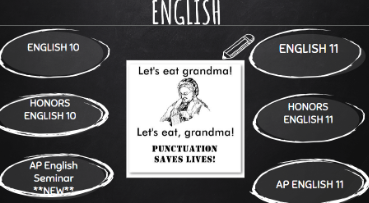
While the SunDevil Times could not confirm who will teach the AP English Seminar, it will most likely be a current Honors English 9 or 10 teacher. According to the College Board, students will learn how to craft evidence-based arguments by analyzing text and synthesizing sources. Students will choose what topics to individually investigate, and there will be a performance task in lieu of a standard AP exam.
The College Board website notes that “AP Seminar helps you hone skills for success in all careers,” as you have the opportunity to practice research skills and effective communication through speaking and writing.
Although its content differs, AP Comparative Government also helps students cultivate skills in relation to political science and comparative analysis. Students explore political institutions, participation, culture, and regimes of six different countries: China, Russia, Iran, Mexico, Nigeria, and the United Kingdom. Students currently enrolled in this class just finished their Russia unit and are about to begin their China unit.
“During the Russia unit, we did an activity on making a gravestone for a specific Russian tsar,” said senior Megan Hayes. “It was so interesting to learn about Russian political history and culture because it is so different from the United States. We also did an assignment on Russian media using AI with Mr. Cooper, and it was cool learning how to integrate it into what we were learning in class.”
Prior to the Russia unit, students learned about the political geography and legislative chambers of the United Kingdom. Students researched the country’s third parties, the Irish Troubles, English cleavages and even listened to a presentation given by assistant principal Derek Braxton on his time studying abroad in St. Andrews, Scotland.
“A lot of the activities we did during the UK unit were compare and contrast, such as looking at the differences between the House of Lords and the House of Commons,” said senior Caitlynn Strader. “The activity I enjoyed the most was making a poster for a certain UK political party. It allowed me to get a feel for how the British political system works.”
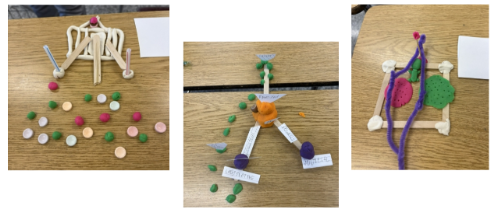
Ask any current student about their favorite part of the class, and they will almost certainly mention the food days held once per unit. For the United Kingdom, students brought in English tea, mini cheddar scones, and sticky toffee pudding, while for Russia, students brought in beef stroganoff, Kompot juice, and blinis.
“I really loved the blinis,” said senior Serena Xie, who is also in Mechling’s regular AP Government class. “For the Russian foods, my favorite was definitely the stroganoff. My favorite part of AP Comparative Government is how closely it connects with AP U.S. Government. I get really excited whenever we come across a term or concept that we have already learned in regular government.”
Current students recommend AP Comparative Government, as it has provided them with a fresh global perspective on politics outside of the United States. While the class does not satisfy seniors’ government requirement, it is generally seen as a worthwhile elective.
“Anyone who is motivated and interested in learning about other countries should definitely take AP Comparative Government,” said Hayes. “I recommend it for juniors and seniors, but especially for seniors who will be taking AP U.S. Government. The two curricula are similar in lots of ways. AP U.S. Government will help you prepare for AP Comparative Government and vice versa.”
Students interested in taking AP Seminar or AP Comparative Government should discuss their options with their counselor. For more information regarding the two courses, visit the College Board’s official website or the School Counseling homepage.