The oldest continuously played board game in the world is the game of Go, which is older than both the Great Wall of China and the Roman Empire. Being one of the most complex games ever, it has more board configurations than atoms in the universe. Because of its age and strategic depth, Go has become an integral part of many Eastern cultures, and was even one of the Four Arts in Ancient China.
As AI began to advance at the end of the 20th century, many people did not think Go would be conquered by a machine anytime soon. The complexity of Go requires creativity, something A.I. does not possess. However, decades before the advancement was predicted to happen, the program AlphaGo beat the greatest Go player in the world, Lee Sedol, in a five-game match. The documentary “AlphaGo” shows how A.I. transformed the game of Go and ignited the A.I. revolution.
“AlphaGo” elegantly transforms real-world events into narrative form, leaving the viewer captivated with the historical weight of the AlphaGo versus Lee Sedol match. As a Go player of two years, I was especially impressed by the captivating way the documentary portrayed the game. I judged the documentary based on its storytelling, pacing, and portrayal of the game itself.
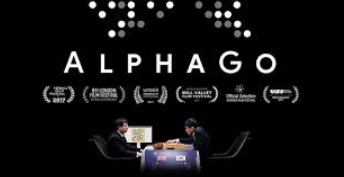
The storytelling of the events surrounding the match and the match itself is excellent. The movie opens by introducing the game of Go and the goal of Google Deepmind, the creators of the AlphaGo program: to beat a professional at the game of Go. It quickly switches to the “character” Fan Hui. As Fan Hui describes his relationship with Go and how Google Deepmind invited him to come to London for a “Go project,” the viewer is shown scenes of Fan Hui going about his life. The visual shots and audio clips from Fan Hui blended together so well that it felt like I was inside Fan Hui’s head and listening to his thoughts as the events of the documentary played out in real time. If I didn’t remind myself of it, I would forget that what I was watching was a documentary.
Fan Hui traveled to London and discovered Deepmind wanted him to play a Go program they had built, to which Fan Hui laughed, as no program had ever beaten a professional. AlphaGo then beat him five games to zero. At this point, the viewer first experiences the weight of the film. For Fan Hui, AI had suddenly sprung from fiction to reality. AI was no longer a concept used on the big screen, but instead a real obstacle for Fan Hui to grapple with as it sat across the Go board from him. If AI was able to beat a professional, was creativity really involved in the game at all?
As the results of the match were announced, critics online said that by moving to Europe, Fan Hui had lost his Go skills and shouldn’t be considered a professional anymore. With boosted confidence, Google Deepmind set its sights on the very top: the greatest Go player in the world, Lee Sedol. Deepmind challenged Lee Sedol to a five-game match, with the winner receiving a $1 million prize. Through the first part of the documentary, the viewer is drawn to the distress of Fan Hui and the shocking result of the AlphaGo versus Fan Hui match.
As the date of the match approached, both Lee Sedol and the Go community were confident that Sedol would beat AlphaGo 5-0. However, after AlphaGo beat Lee Sedol in the first match, the mood of the film shifts from anticipation to depression and shock. The filmmakers use clips from multiple commentary rooms to showcase the immediate, first-hand reactions of the world to game one.

By the end of the documentary, the mood of the film is one of both excitement and sadness. AlphaGo ultimately beat Lee Sedol, which marked the end of human superiority in one of the greatest games in the world. While few people would call AI in general creative, many commentators of the match and even Lee Sedol himself called the moves made by AlphaGo creative.
Two years ago, this documentary was one of my first exposures to Go. It portrayed Go in a way that made it seem grand and complex, which made me excited enough to want to start playing. As I watched the documentary again, I noticed that while many board positions are shown, they are not explained. When I watched the documentary the first time, I did not know anything about the game, so I didn’t understand the positions they were showing at all. Now, I do know the rules of the game, so I can somewhat understand what is happening, but the level that AlphaGo and Lee Sedol play on is so much higher than the level of the average person that I still can’t fully understand why a certain position is beautiful or significant. Of course, explaining the intricacies of every position would make the film much less elegant and much longer. It would alienate the general audience, who likely does not know how to play Go.
My only criticism of the documentary is that they did not explain Go more in depth. Besides this, the documentary gracefully builds a narrative that focuses on the intersection of an ancient game and novel technology. The structures used to build AlphaGo have been applied to many different AI models since the historic match, proving the advancements made by Google Deepmind in this era truly ignited the AI revolution.
Frank Lantz, interviewee for the documentary and Chair Emeritus of the NYU Game Center, said, “There’s a reason people have been playing Go for thousands and thousands of years, right? It’s not just that they want to understand Go. They want to understand what understanding is. And maybe that is truly what it means to be human.” While this match was seen as a defeat for humans and a win for AI, the ultimate goal of Go players is the same as for Deepmind: to truly understand intelligence.