On Sunday, February 8th, quarterback Sam Darnold’s 202-yard passing performance gave the Seattle Seahawks the slightest edge over the New England Patriots to capture the franchise’s second Super Bowl title. Yet for many viewers, the number of times the Patriots turned the ball over or how many receptions receiver Jaxon Smith-Njigba recorded was largely irrelevant. In fact, despite being named the 2025 Offensive Player of the Year, much of the audience had probably never heard of Smith-Njigba prior to the game, but they watched anyway.
This disconnect is a prime example of a mega event that embodies theorist Guy Debord’s principle of the “society of the spectacle,” which describes events “not as a collection of images, but as a social relation among people, mediated by images.” In this context, the football game itself, or the image, has become a filler for the halftime performance and commercials, the true sites of social relations. Football, what used to be the focal point, is merely a backdrop.
“I watch the Super Bowl for the halftime show,” said senior Emma Bernal. “This year, specifically, it was for Bad Bunny. I don’t watch football any other time. Most of the people I know don’t even watch the Super Bowl for football.”
With the rise of social media and the pressure to maintain relevance, it’s no surprise that entertainment has begun to overshadow the game itself. With the halftime headliner announced months in advance and weeks of promotion teasing set lists and guest performers, it’s hardly shocking that viewers solely tune in to say they watched.
“Everyone talks about the Super Bowl the day after because it’s one of the most popular sporting events,” said junior Chanel Walker. “I don’t really care about football. I didn’t watch it, but the only thing I did watch was the halftime show.”
With the halftime show functioning more as the main event instead of a mid-game interruption, the same can be said about the frequent commercial breaks that companies and brands pay millions for. The humorous plot lines and star-studded appearances only add to the game’s appeal, with these commercials also being publicized and hinted at weeks before gameday.
“I’m interested in the commercials when I watch,” said senior Olivia Turner. “I like to see all of the famous artists and people in them, but most of the time they’re just bad. I remember one from years ago with Eli Manning in the tutu at the ballet. My favorite was the Backstreet Boys doing the karaoke this year.”
Social media further amplifies this phenomenon by rapidly circulating reactions to viral halftime content and commercials, allowing those who don’t watch to be just as knowledgeable as those who do. While this accessibility may seem beneficial, it only creates a sense of obligation. Social media pressures people to tune in, even if they aren’t interested in football, fostering a false sense of duty to “not miss out.”
“If I didn’t watch it, I feel like I’d miss out, because it’s the only thing that people talk about the Monday we go back to school,” said senior Haley Powers. “I love watching the halftime show because there’s so much artistry, and I’m a dancer so I love to watch the dancing.”
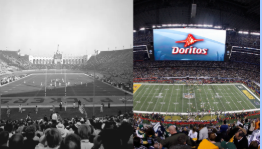
While the National Football League generates hundreds of millions of dollars from the Super Bowl alone, it’s worth addressing what this culture shift means not only for the brand, but for the sport. The Super Bowl was once celebrated “for the love of the game,” but its place in American culture has drifted far from that of early broadcasts. Now, it’s instead about the love for everything else besides the game, and to some fans, it’s upsetting.
“More people should be into the game rather than the celebrities and performance,” said sophomore Megan Moore. “The Super Bowl is more for entertainment rather than stakes, and people get too wrapped up in it. Football is such a great sport because it’s at the heart of America. You can’t think about American sports without thinking about football.”
It’s become even more difficult for fans to enjoy the Super Bowl in person, as nosebleed tickets can cost upwards of $1,000, and influencers snag them before authentic sportsgoers even have the chance to purchase. Celebrities view the Super Bowl as an outlet for content or as an avenue for relevance, while, in reality, they’re only crushing the dreams of the average sports fan who’d sell an arm and a leg for this experience.
“I feel like it’s pointless for influencers to attend,” said Turner. “You couldn’t even see what was going on during the halftime show because of how it was set up, but maybe Bad Bunny did that on purpose, so none of the influencers could see. I do wish people would watch football because it’s fun when I can actually talk about it with people.”
As a sports fan who wouldn’t dare miss a Pittsburgh Steelers game, I’d argue that people who watch the Super Bowl just for halftime need to give football more of a chance. If you only tune in for the entertainment, you’re missing out on the beauty of the event and the regular season that allows this avenue for artistry in the first place. While it takes time to learn the rules, football is a narrative sport, and its integral place within American culture must be renewed.