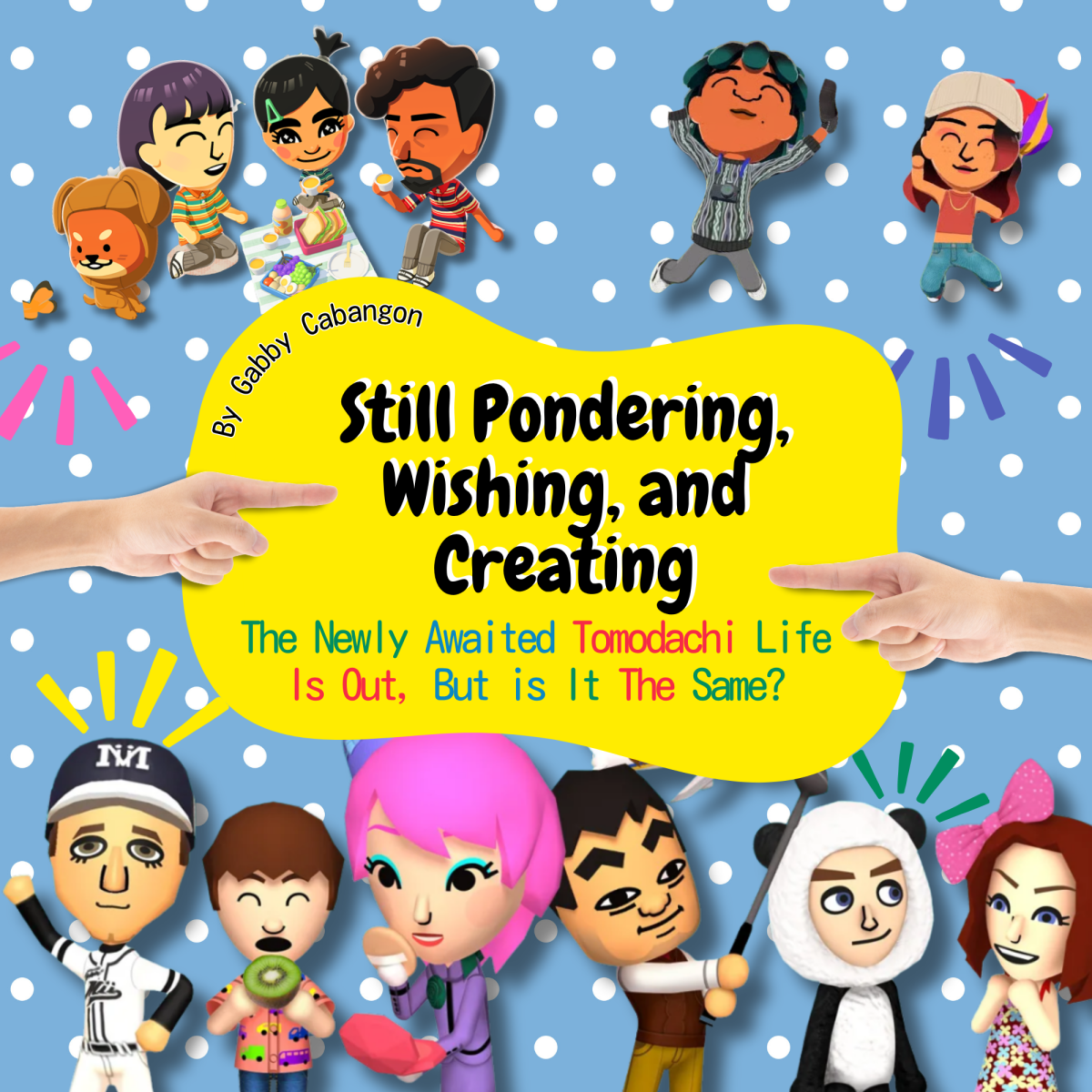
From 2013 on the Nintendo DS to 2026 on the Nintendo Switch 2, the Tomodachi Life franchise has been globally loved for over a decade. The series of these games first originated in Japan for the Nintendo DS, where little “Mii” characters, or “Miis,” are created by the player and are cared for to see how their social lives unfold, with these Miis building friendships, romantic relationships, and even families. As of April 16th, 2026, the newly released Tomodachi Life: Living The Dream game on the Nintendo Switch has quickly risen in popularity.
The new release of Tomodachi Life: Living The Dream first gained traction on social media, where the game attracted a number of previous players, as well as new ones. The new release also includes a multitude of improved features, such as Mii character interactions, island customization, and the most expanded customization features of Mii characters. Some of these features include allowing the player to draw on the face of a Mii character itself, customize clothing, items, food items, or houses, give “quirks” to Mii characters that can change how Miis behave, and even island terraforming.
“I’ve always known of Tomodachi Life, but never really had the motivation to play it,” said senior Camden Rippentrop. “When the new one was released, I kept seeing TikTok videos on the new, improved customization system they added, and it sparked my interest.”
However, this new release also sparked a bit of controversy among its fans regarding the Mii character customization, as well as previous game features that were removed in the new release. Some believe that the Mii customization improved greatly, while others believe that Nintendo focused way too much on the aspect of Mii customization, and that this focus took away other aspects of the game itself.
“For me personally, I miss the concert hall where you could make songs for your Miis to sing and play instruments,” said junior Emily Carino. “Although I do think they should add it back because the concert hall spawned a lot of funny videos and was overall a fun experience to do with your Miis, since there really isn’t much to do now besides the brand new [in-depth Mii customization].”
Another highlighted concern that players caught onto was the change in pace in Tomodachi Life: Living The Dream. Unlike the old release, some find it difficult to regularly enjoy gameplay in the new release, which ultimately makes the game itself feel repetitive.
“There’s a ton of nostalgia behind the old one, but it also generally felt like there was more to do,” said senior Bethany Wilmoth. “Sure, it got repetitive, but I would say the newest edition became repetitive faster. I’m really holding out for new updates for [Living The Dream]. I think the graphics, customization, and overall relationship-building in the current Tomadachi Life is a massive improvement, but it doesn’t mean much when the gameplay is lacking.”
A similar perspective from junior Chase McConnell compares the overly social interactions in Tomodachi Life: Living The Dream to Animal Crossing: New Horizons, another video game by Nintendo that is well known for social interaction gameplay with various animal villagers on an island that is customizable to the player.
“There is literally nothing fun to do other than customize, unlike the first game,” says McConnell. “Also, I feel like it has a similar issue as ACNH (Animal Crossing: New Horizons) with the NPCS being overly nice and it being ‘way too easy’ to form good relationships— there’s less investment involved [in my opinion]. It just makes the game [a bit] boring.”Despite these significant changes in the new release of Tomodachi Life: Living The Dream, there is always room for improvement, as the game has just been released. Some anticipate future updates from Nintendo addressing a few of these removed features, and players are hoping to experience the nostalgia the game once brought.