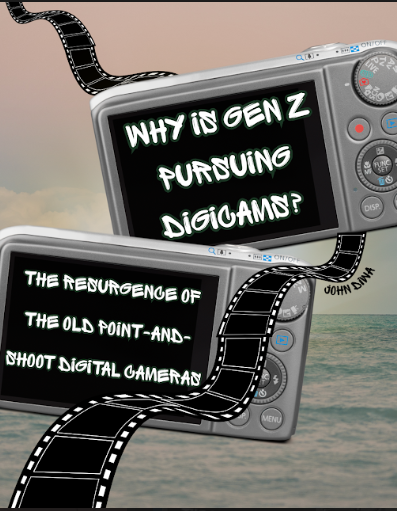
As vintage fashion and physical media see a resurgence, a certain ‘electronic antique’ is making a comeback: the point-and-shoot digital camera. Also known as ‘digicams’, these devices are prized for their nostalgic aesthetic and distinct grainy pictures that smartphones cannot replicate. Distinguished cameras that students use include brands Canon, Kodak, Sony, Fujifilm, and Nikon.
“I currently own a Nikon L32 Coolpix, and it’s the best gift I have ever received,” said senior Gracie Fries. “The variety of image filters really make the colors pop, and I’ve noticed that my camera airbrushes people’s faces just enough to make them look like they’re glowing. It’s so pretty!”
Digital cameras are often coveted for their ability to develop photos into nostalgic, Y2K-style timepieces. As opposed to smartphone cameras with their high-resolution pictures, the grainy, flash-heavy photos are the pictures that the younger generation normally lean towards. Taking pictures with digital cameras also requires more effort, making photos feel more “earned.”
“Yes, it sounds a little performative, but I enjoy noticing the perfect time to take a good digicam picture when the composition or lighting is good. Or if I just want to take a silly picture of my friends,” said Fries. “[But] the low-light photos look so much better on my digicam, making flash a huge help. I feel like my phone camera washes out the colors when the flash is on.”
Students still use their phones’ cameras for casual settings to emphasize the lighthearted, frivolous nature of the activity, usually with friends.
“If I want to get bad or silly photos of my friends, I find that my phone is better for capturing those instead of my [digicam],” said senior Haley Powers. “The lighting of the digital camera automatically makes it less funny/silly, at least to me.”
Senior Mirabelle Malone agreed. “I would use [my phone] if I’m with friends or at a party.”
While many students enjoy the aesthetic and physicality of digicams, others point to their downsides.
According to resale platforms like Depop and eBay, older digital cameras have surged in popularity among Gen Z buyers over the past two years, heftily increasing the price of the hardware. The average price of these ranges from $40 for standard working cameras all the way to $250 for the high-end, vintage luxury digicams, discouraging new users due to the expensive price point.
Some students also prefer using smartphone cameras rather than digicams for the convenience. The process of transferring the camera’s SD or CompactFlash cards to a device that can export them is often off putting to some, especially in an age where efficiency is paramount.
“I take as many photos [on the digicam] as I can for the best selection,” said junior Jacobi Dantzler. “So, it takes way longer for me to download them versus photos taken on the phone.”
Clubs and their in-school activities, like Class of 2028’s Saint Patrick’s Day photo fundraiser or the Asian Cultural Club’s potluck, have started documenting these events with digital cameras due to the restrictive phone policy, offering a solution to the rule.
Even if the digicam trend fades, it has already established its place in student culture, highlighting how many students still value nostalgic, imperfect moments over practicality. Comment down below what camera you have!