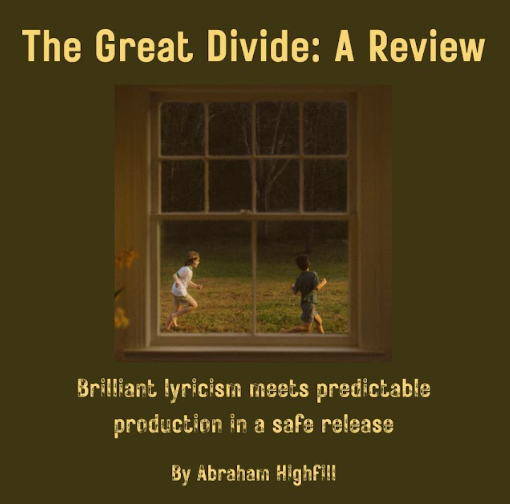
The Great Divide by Noah Kahan is a modern take on indie folk. In contrast to indie folk from the 1990s and early 2000s, folk music in the 2020s maintains the produced, almost rock-y sound of the 2010s while deepening the meaning of the music and deviating from the optimistic, “millennial” themes of 2010s folk music.
The two main weak points of this album are its length and production quality. The album is produced almost exclusively by Noah Kahan, Gabe Simon, and Aaron Dessner. Simon is best known for his work on producing Kahan’s other album, Stick Season, which launched Kahan into fame. Dessner has had a long and successful career, working with artists such as Taylor Swift, Ed Sheeran, and Gracie Abrams. However, the production of the album does not feel new, unique, or sincere.
The most direct example of this is the noticeable reverb overlaid on Kahan’s vocals, which makes certain songs feel more cavernous than intimate. When Kahan is singing about his personal relationships, a more intimate sound would help the listener connect with his themes more. The songs “Downfall” and “Willing and Able” serve as perfect examples of this. They both have excellent lyrics and narratives, but the reverb on the tracks reminds the listener that, at the end of the day, these songs were engineered in a studio.
With seventeen tracks on the album, the low production quality can leave the listener feeling like they are doing the work of searching through a sea of okay songs to find memorable music. A more condensed record would allow the listener to put more thought into each individual song and feel more connected to Kahan’s deeply personal themes throughout the album.
Being his first album after achieving fame, songs from The Great Divide are usually from the perspective of people close to Kahan and about their changing relationships with him. “American Cars” and “Downfall” are both about one of Kahan’s friends or family members grappling with staying behind in Vermont while Kahan grows in fame. In “Downfall,” the narrator compares themself to a “roadkill fawn” that they saw with Kahan. Kahan’s clinical reaction to the animal “left alone to rot like that” mirrors how the narrator feels like Kahan has abandoned them.
“Paid Time Off” and “Willing and Able” are both about the complexities that fame brings to a personal relationship. In “Willing and Able,” the narrator of the song starts as Kahan but switches to a friend after the chorus. The friend feels like Kahan’s fame has made it so he only comes home when he needs his “next song.” Just like in “Paid Time Off,” the narrator only wishes their relationship with Kahan could return to simpler times.
The resentment in “Paid Time Off” presents a problem that other artists have faced. Kahan rose to fame because of his sincerity and personal songs. He writes and sings about his own life, but what happens when his life changes fundamentally? Being on tour is an entirely different experience from living in rural Vermont. If Kahan’s goal is to make impactful music, then the popular definition of success might actually be failure. Fame removes artists like Kahan away from the people who inspired their original successes, sometimes making further success impossible.
Overall, The Great Divide is an above average album. Kahan continues to showcase his excellent songwriting and includes practically every instrument you would expect on a folk album. Despite the less than ideal production quality, I would not be surprised to see The Great Divide near the top of the list for the best albums of 2026.