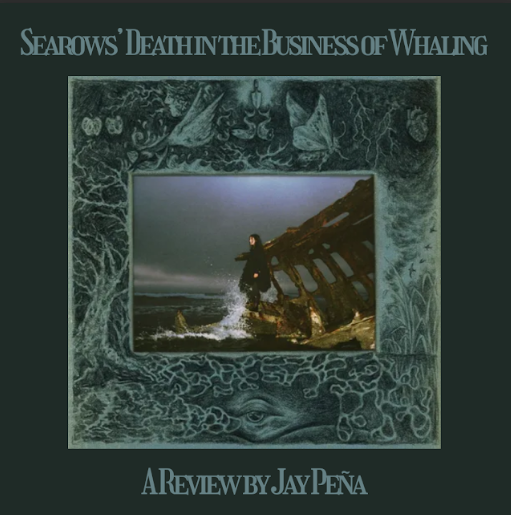
Of all the genres of music I find myself listening to, indie-pop is not usually at the top of that list. This is not to say I dislike the genre; it’s just not typically on my radar. However, sometimes the occasional release will intrigue me enough to give it a listen. Such is the case for the latest release from Oregon-based artist Searows, Death in the Business of Whaling.
Searows, the stage name of musician Alec Duckart, is a relatively new artist. His professional career only started in 2020 after gaining some notoriety on social media, specifically TikTok, upon sharing his song “House Song.” Since then, Searows has released two EPs and two albums, with the most recent album being the aforementioned Death in the Business of Whaling, a melancholic and spacey indie record heavily inspired by the likes of artists such as Phoebe Bridgers and Ethel Cain, released January 23, 2026.
The album starts strong with the track “Belly of the Whale,” which features rich, atmospheric instrumentals, the soft, serene, layered vocals of Duckart à la Bridgers that create a really nice texture, and the nice touch of a banjo in the background, contributing to an almost folk-like tone. The following song, “Kill What You Eat,” creates an even more melancholic atmosphere and allows Duckart’s vocals to be even more prominent. The overall mood and sound of this record is one that I really enjoy and find to be as soothing as it is pretty.
However, while this sound does make for a pleasing listen, some of the songs begin to sound too similar to one another, feeling repetitive and almost formulaic in construction. After hearing four or so songs on a nine track album that follow the same basic recipe of reverb heavy guitar chords with softly sung vocals, and the occasional shift in the chorus to a louder, thicker sound for dramatic effect, it gets tiresome. It’s pleasant the first time, maybe the second, but by the fourth, it just feels a bit trite.
That being said, there are songs that do deviate slightly, such as the track “Dearly Missed” or, my personal favorite, “Hunter,” which feature a more prominent chorus effect on the guitar tone and more depth in sound. The final song of the album, “Geese”, stands out as being a more acoustic style track on the album, creating a more intimate feel to it.
Moreover, in spite of the repetitive sound, the production is rather nice and reminds me quite a bit of Ethel Cain’s Preacher’s Daughter in its mixing and special effects. In fact, I’d say Death in the Business of Whaling wears a lot of its influences on its sleeve, perhaps to a fault. While the production is lovely, it does feel occasionally derivative at times.
Having said that, the lyricism displayed on this album is wonderful, and I have no real criticisms of it. Each song reads like a poem, focusing on more vulnerable sentiments of relationships and sense of self in an artful way that I appreciate. The lyrics are an overall enhancement to the album and demonstrate the songwriting potential of Searows.
Ultimately, I’d say this album was worth the listen. While it doesn’t show much subtlety in its influences or have much variation in sound, the depth and mood of the featured tracks, spacey production, and thoughtful lyrics do make the album worthwhile. It’s not by any means groundbreaking or novel, but it makes for a nice, relatively short, soothing listen that I think most would enjoy, especially if you’re interested in that type of indie-pop style.