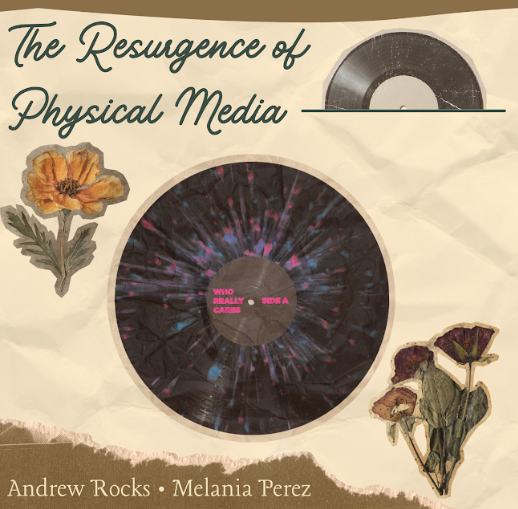
Gen Z is an “in-between” generation, meaning it was born when physical media was fizzling out of popularity and raised during the age of digital media. Recently, many of those part of Gen-Z have chosen to become less reliant on digital media, starting to migrate back to collecting physical media such as CDs, DVDs, vinyls, etc. Some choose to do this because they feel that digital media is not reliable, and that the media they have isn’t truly “owned” by them.
“My phone may be mine, but the software inside is not,” said senior Cyprus Leuhrs. “If something were to happen to the hardware, I would lose all my music, my news, my movies, the things I love. Through collecting physical media, I am ensuring that I will always have access to the media that brings me joy.”
This sentiment is shared by many people, which is a prominent reason why people choose to collect physical media rather than digital media.
“I like knowing that whatever I’m holding in my hands will be here no matter if I have Wifi or not,” said sophomore Brianna Heinlen.
Not only is it more convenient, it simply feels better to hold the media than to see a small picture of it on your phone.
“I think it’s good,” said senior Keeley Bolling. “Digital media is great, but having the physical copy of something always has a better feeling than having the online version that’s easier to get.”
We have grown reliant on technology and digital media in recent years. Reverting to using physical media allows us to break free of that connection and be more in tune with the world around us.
“We’ve gotten so used to the ease of the modern age of streaming,” said sophomore Ashlyn Ellis. “However, physical media can introduce us to new music and give us a unique way to listen to music we know we love.”
Physical media’s accessibility is something that many appreciate and take advantage of as well. People can easily bring physical media wherever they go without having to worry about needing Wi-fi or service.
“I have an MP3 player, and I use it at school when I’m taking tests,” said senior Graceanne Cloud. “I need to listen to music, and I can’t use my phone anymore, but I use my MP3 player very often. I love [it].”
Also, purchasing physical media allows one to show a deeper connection to an artist. Listening to them on streaming services can demonstrate your appreciation, but purchasing a CD or vinyl is a much deeper commitment to your favorite artists, according to junior Killian Adams.
“More people buying physical media means more of it being produced,” said Adams. “More physical media around results in better preservation of culture. It also gives better recognition to the creators and artists as streams don’t show willingness to purchase. Someone going to the store and buying a record better represents how that artist has affected the person.”
Although many people enjoy collecting physical media, there are still some concerns about the environmental impact of mass production.
“The only downside is that the more demand [physical media has], the more creation of electronic waste,” said Cloud. “Especially for vinyls, we don’t need to be making 20 different styles for one album. I think being able to listen to things even if you don’t have your phone on you is great. I just think we should be more conscious about this becoming a bigger market for our ecosystems.”
While there can be consequences for the overproduction of products, there can also be more pollution depending on how people treat their items. But if people take good care of their items, it will be easier to prevent pollution.
“I think it could [benefit society], as long as we don’t destroy and break these items and leave them creating pollution,“ said senior Isabella Gray.
The resurgence of physical media brings back a lot of memories that can potentially be kept forever, versus the streaming that has become more accessible to people globally. CDs and vinyls have come back and are here to stay.